
Golden-hour mushroom
- Camera
- Apple iPhone 17 Pro
- Recorded aperture
- f/1.78
- Exposure
- Approximately 1/1271 s · ISO 100
- Focal length
- 6.765 mm · 24 mm equivalent
- Subject distance
- Not recorded in the supplied metadata
Interactive explanations of signal research, prompt engineering, game design, security workflows, and photography. Adjust a variable. Follow the model. Understand what the numbers do and do not tell you.
I study sub-GHz radio behavior through signal capture, archival, comparison, and controlled experiments on authorized systems. Frequency, modulation, timing, and receiver behavior each reveal a different part of the picture.
Application areas include compatible gate and garage remotes, vehicle charging interfaces, wireless sensors, and telemetry. Frequencies and protocols vary by device and region. Compatibility does not imply that a captured transmission can be replayed successfully; rolling codes and authentication change that behavior.
Adjust the carrier and separation to explore a simple free-space link. Antenna gains and other losses are set to 0 dB. This assumes an unobstructed far-field link with matched polarization.
Illustrative carrier and free-space prediction, not a spectrum scan, measured RSSI, device range estimate, or prescribed transmit channel. Real surroundings, antennas, receiver bandwidth, interference, and protocol requirements matter.
λ = c / fWavelength λ in metres; frequency f in hertz; c = 299,792,458 m/s in vacuum.
L = 20 log₁₀(4πdf / c)Free-space path loss L in dB; separation d in metres. Received power: Pᵣ = Pₜ − L under the stated zero-gain, zero-loss assumptions. SNR = Pᵣ − noise floor, in dB.
Model references: ITU-R P.525-5 · NIST: speed of light · TI: wireless sensor applications
My work combines prompt engineering with experimental tuning of on-device AI systems. Clear instructions, explicit constraints, and repeatable evaluation make changes easier to examine.
Open-ended request
“Summarize this incident.”
Structured example
“Using only the supplied evidence, summarize the incident in three sections: observations, uncertainty, and next checks. Separate facts from hypotheses. Mark unavailable information as unknown.”
Illustrative prompt structure. No model is running on this page, and this example is not a claim about training results.
Pass rate = (Σ Iᵢ / n) × 100%Iᵢ is 1 when example i passes the predefined checks, otherwise 0. Here n = 20. Example criteria: evidence fidelity, output structure, and uncertainty handling.
Keep the test set, rubric, model version, and generation settings fixed when comparing prompts. Review failures individually and repeat stochastic runs. A higher score on one small sample is not proof of general improvement.
Related mathematical definition: scikit-learn: fraction of correct results. The custom rubric here is illustrative, not a published benchmark.
Golden Hour connects atmosphere, world layout, character motion, and performance. The design process moves between a visual goal, a small implementation, and checks inside the playable world.
Constant gravity, no drag, and equal launch and landing height. This explains one design principle; gameplay also adds collision, input, terrain, and animation constraints.
x(t) = v₀ cos(θ)t
y(t) = v₀ sin(θ)t − ½gt²
Position in metres, time in seconds, launch speed v₀ in m/s, and gravity g in m/s². The plotted angle is converted to radians for calculation.
Frame budget = 1000 / fps60 fps allows about 16.67 ms per frame. Shared geometry, distance-based detail, and filtered surface textures help keep the world responsive as visual quality improves.
Physics reference: NASA: ballistic flight equations. Explore the game guide ↗
R0VER0K brings scoped assessment tasks, operator decisions, evidence, and reporting into a repeatable workflow. I developed successive versions throughout 2025. A version created in Cambodia for government use placed greater emphasis on OSINT; my personal testing version supports continued experimentation and possible future use or commercialization.
This diagram explains the assessment lifecycle. A separate source-based history now describes seven supplied government-version archives, including the Python engine, operator launcher, local classification, and evidence pipeline. This browser demonstration does not execute those programs.
Coverage = validated checks / scoped checksA simple progress measure for a fixed assessment plan. It measures completed validation, not security, risk reduction, or absence of vulnerabilities.
The earlier versions and Cambodia work remain part of the project history and development direction. A detailed discussion can cover design decisions and suitable demonstrations without exposing internal configurations or client information.
A photograph combines a point of view with optical and exposure choices. Explore the relationships below, then compare them with camera settings recorded in two of my supplied images.
The aperture drawing changes with pupil diameter. Ray geometry is schematic, not a reproduction of a camera lens. Sensor brightness, diffraction, depth of field, and computational processing involve additional factors.
N = f / D
1/f = 1/u + 1/v
N is f-number; f is focal length; D is entrance pupil diameter. u and v are subject and image distances in the ideal thin-lens model. Use the same length unit throughout.
Relative exposure ∝ 1/N²At fixed shutter time, scene luminance and transmission, doubling the f-number gives one quarter of the exposure. The calculator compares against f/2.8 and assumes distant-subject conditions.
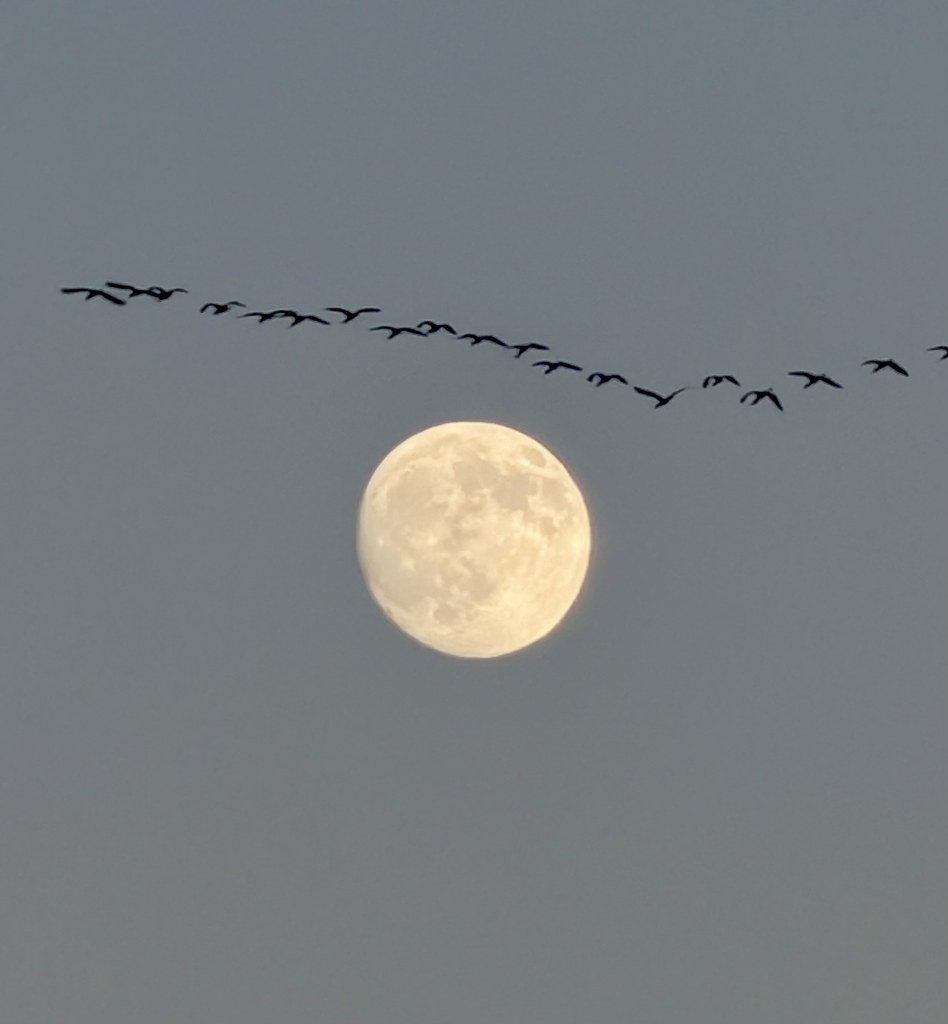
Settings were read from the supplied JPEG files. The recorded 35 mm equivalent value can reflect crop or digital zoom and should not be treated as the physical lens focal length. Coordinates and other location metadata are not displayed. The sliders above are independent examples, not settings applied to these photographs.
Optics reference: Physically Based Rendering: camera models.